

How I Broke Writer’s Block Part 2: Techniques
Breaking Writer’s Block an Unconventional Way
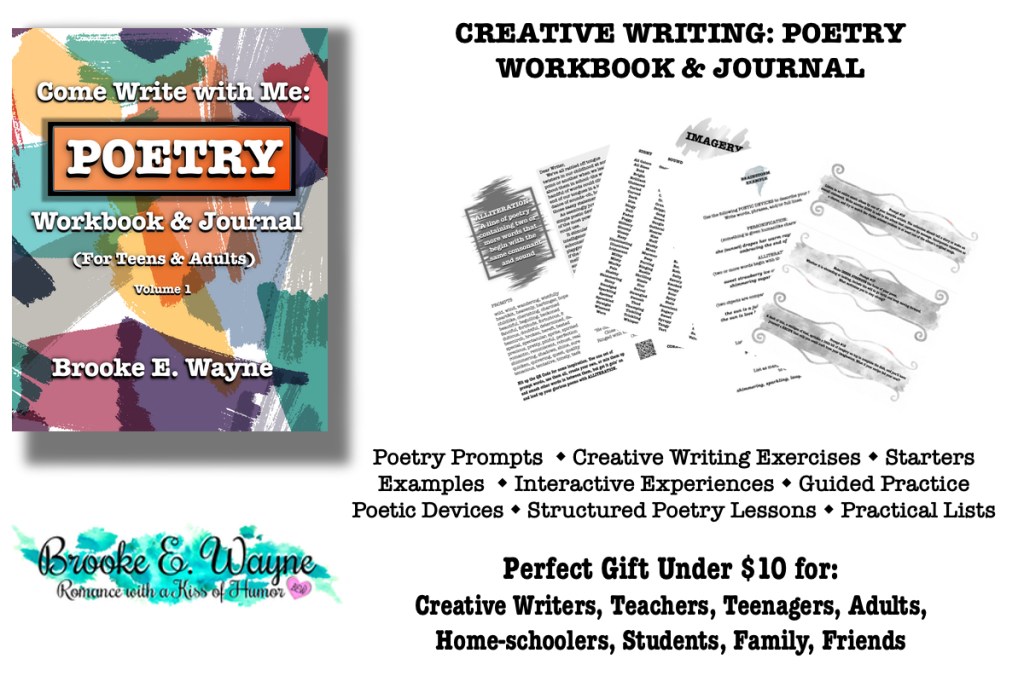
If you’re stopping by to pay a gander to what I’ve got to say about writer’s block, welcome! I recently went through a two-year stint between the last novel I wrote and the recent how-to book on writing poetry, Come Write with Me: POETRY Workbook & Journal (For Teens & Adults), I just published that came about using some unconventional techniques to snap me out of my slump. I hope you get something out of this post that others haven’t offered yet.
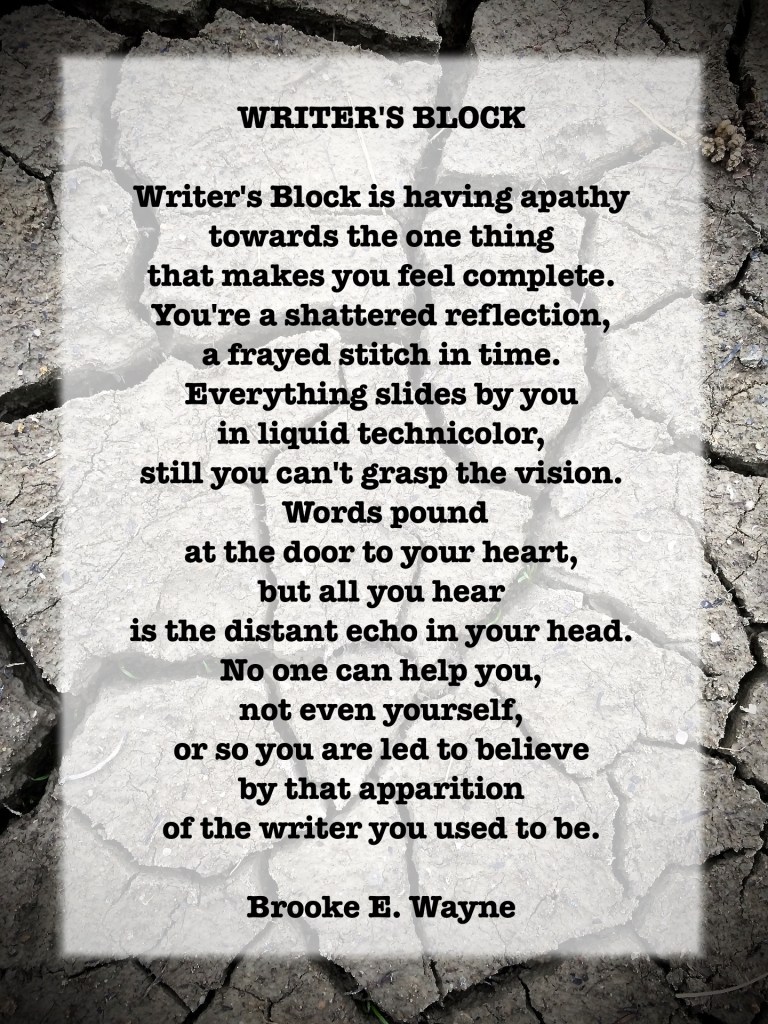
First, I’ll start by listing some of the conventional techniques that help during different stages of battling a creative writing struggle. I have practiced these strategies for years and have found them useful during the perils of writing a 100k word count manuscript. They’re catered to keeping going rather than recovering from an episode (like my 2-year bout) of total flat-lining on a third novel that I have everything–I mean outline, character write-ups, synopsis, blurb, research galore, cover, and more–everything for.
I’ve used all of these techniques to prepare to write, as well as during the writing process. They’re tried and true for minor bumps in the road to completing a manuscript.
Tip #1: READ
Read in the genre you are writing. (This is an anti writer’s block tip not a declaration to only read in your genre. You’re trying to jump start a stutter in your current writing project, not grow your writing style, in which I would totally cheer you on to read all the genres.)
Reading what you write will get your head back in the game by:
~ Refreshing your memory of what your genre’s expectations are concerning plot points
~ Remind you of the tone a character’s voice should sound like in your genre
~ Get you out of your own story in your head long enough to give your brain a deep breath to jump back in refreshed
Tip # 2: MOVE
Get up, get out, and get writing.
What I mean by moving is:
~ Changing your physical location from the place you always write
~ If you sit at a desk, wheel your bootie to another room and invest in a TV tray (since lugging a desk might not be as much fun). Try a room with a view, too, or better yet, go outside to write.
~ If you hang out in a coffee shop, go saturate yourself by osmosis in a library
~ If you kick back in a recliner (like me), go stand at the kitchen counter (*This one works like a charm for me when I’m doing a quick edit on something and need all the good words to come to me in order to tighten and turn up the Technicolor on my style.)
Tip # 3: SPEAK
Tell your story to yourself.
~ Speak into an app on your phone, play it back as many times as you need to in order to pick up where you left off
~ Tell the story to yourself then go back and transcribe it
~ Use this strategy to edit your whole novel when you’re done. I did with one book. Best revision round ever.
Tip # 4: WRITE
I know you’re thinking, uh, that’s the point, I’m not writing, so how can I wr…
~ Research something you need for your novel and take notes
~ Hand-write a scene; it stimulates a different part of your brain than typing does and might spawn some creativity
~ Add some drawings (even if you’re a stick figure kind of artist) like mapping out a blueprint of a room you were having trouble describing, then start labeling, then add some phrases, and in no time, you’ll be crafting scenes
~ Write something different in the meantime. Writing is writing. Who knows what kind of glorious thing will be born out of changing from the same ol’ same ol’. See: Come Write with Me: POETRY Workbook & Journal (For Teens & Adults) Vol. 1 and the blog post about it: How I Broke Writer’s Block Part 1: The Story Behind the Book
Tip # 5: LISTEN
Listen to music, but NOT your favorite emotionally charged songs that used to always help you get in the mood but are somehow letting you down now. You’ve probably already tried that, and it didn’t change much, which is why you’re Googling writer’s block tips right now. The following technique broke my writer’s block once and for all!
~ Go to YouTube and type in SOLFEGGIO MUSIC FOR CREATIVITY
~ You’ll find a plethora of some pleasant-sounding and maybe even some annoying musical configurations that will straight-up mess with your brainwaves and rewire you to create words.
Whether you’re into mind, body, and soul or not, all things have a vibration. It’s a scientific fact. Our brains are programmed to respond to the vibrations (sounds—music) of all things. When you listen to certain frequencies, you’re brain does a little organized dance. We’re not talking emotional resonance; however, your emotions can certainly be upended by some tones. We’re talking about getting your left brain and your right brain to play ping pong with the help of some headphones and a few songs that you can listen to before or during the writing process.
(Another blog will be coming soon about how I am using solfeggio music to manage my anxiety!)
I highly recommend binaural beats and iso tones in the music you choose, which I find ignites maximum creativity for me. If you’ve never listened to any solfeggio music before be warned, you might feel like you’re floating, but you might also feel like you’re on a boat floating on a turbulent sea. Ease into it, if you need to. This music literally effects your brainwaves.)
Some of my favorite Solfeggio musical pieces that helped me with my writer’s block are:
The Brainwave Hub:
Focus & Creativity—Creative Thinking, Visualisation, and Problem Solving
~ 4 hours of endless brainwave fodder
~ Sweeet when I listen to this one on a barely audible volume the entire time I write
Power Thoughts Meditation Club:
Theta Waves—Positive Creative Energy Music
~ 3 hours of brainwave fodder
~ Sensational when I listen while gathering notes, reviewing what I’ve written, as well as writing scenes for two series I’ll be starting next
~ I like quiet when I write, but this has never bothered me cranked up.
Zen Melodies—Binaural Beats:
Binaural Beats Meditation for Creativity & Writer’s Block
~9 minutes of brainwave fodder (w/ flute)
~ Splendid when I listen before I write—eyes closed, measured breathing, mindful of my whole story—then I go into silent mode and write
I’ll do another post eventually where I make a longer list and gut out the other tips, focusing specifically on solfeggio music. If you don’t subscribe to me yet, you’ll find the link at the bottom of the page. In the meantime, happy hunting on what works for you. Please let me know what else you find out there that helps get your creative juices flowing. I’d love to try it! I hope these tips I’ve shared are useful to you, and I wish you all the best on your journey as a writer.
~Brooke E. Wayne
My Current Works on AMAZON: (My latest, the how-to Poetry writing book, will arrive before Christmas if you order in the next few days! It’s under $10 and makes a great gift for that teen, adult, teacher, homeschooler, or friend you know who loves to write creatively! Or maybe you just want one for yourself. Shh.)


 brookeewayne.com